Showing posts with label writing. Show all posts

Saturday, 9 November 2013

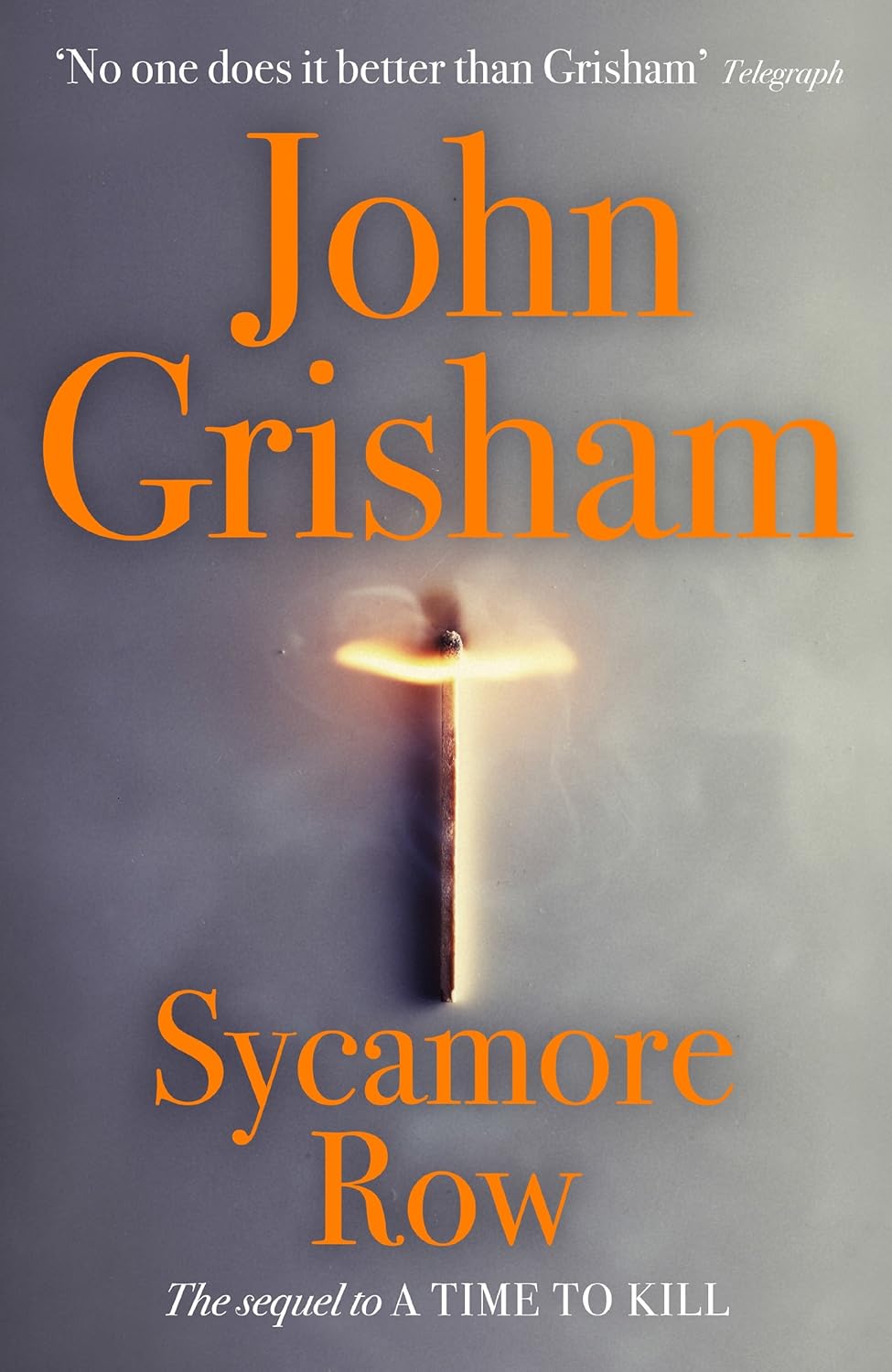
Sycamore Row: John Grisham in his element


A old, reclusive man, dying of cancer, hangs himself from a sycamore tree in his estate, leaving behind nearly all his hard-earned millions to his black housekeeper. His estranged children, who have been cut out of Seth Hubbard's "substantial" fortune in the last-minute handwritten will, are having none of it – the battelines are drawn for a long legal tussle.     

John Grisham returns to his beloved Ford County, Mississippi, for a sequel to his 1989 debut novel. Three years after the events of A Time to Kill, when young attorney Jake Brigance gets his big win in a racially charged trial in the town of Clanton, his services  are called on again to defend Seth's will. “I want this will defended at all costs,” Seth says in a letter to Jake, peppered with choice words at lawyers. “Fight them, Mr. Brigance, to the bitter end.” 

It's a good ol' fashioned courtroom brawl, and Grisham is in his element, painting it in all its colour and plentiful shades of grey. It's supposed to be dull – there are enough warnings of “death by deposition”, and the legal process, as always, is described in detail. But in a Grisham book, that only brings a comforting familiarity that draws out the chuckles, a sign to put on your softest pyjamas and get some hot chocolate for when stuff hits the fan.              

What made Seth do what he did? Sycamore Row's great reveal is tense and competent, but comes as less of a surprise than other plot twists we've known the author to pull off. Compared to its predecessor, this one seems to tread more cautiously around political correctness. And Lettie Lang, the black housekeeper, is no Carl Lee Hailey.   

Repeated jokes and some inexplicable minor talking points in a 550-page novel are other gripes, but there was, nonetheless, a satisfaction in meeting old characters and stars of other Grisham novels set in the area: Harry Rex, overweight divorce lawyer and loyal friend; Lucien Wilbanks, drunken landlord and mentor; Willie Traynor, one-time journalist and millionaire; the no-nonsense Judge Atlee who we know has some secrets of his own...There's definitely enough character in Ford County for a few more Acts.

Thursday, 7 July 2011

In defence of the soppy romance books

My romance with Mills & Boon started somewhere in class 9 or 10, with the first book I read in between studying for exams.

For someone with a proclivity then to get lost between the covers of story books, M&B made for convenient exam time reading - it gave me my everyday fix of fiction, but nothing fizzy enough to distract me from pages of fractions or history facts.

So, when I read that "Mills & Boon's romance novels should come with a health warning, according to a report published in an academic journal," that also blamed them for "unprotected sex, unwanted pregnancies, unrealistic sexual expectations and relationship breakdowns", I shall employ the same contemptuous sneer perfected by the hundreds of Greek gentlemen with chiselled faces/bodies that have graced the very covers of these far-from-erudite publications.

Cover of Sweet Deceiver (heh-heh). Note the sneer. 

To say this of the books established as a successful study technique, and with a proven record in improving one's mood and eliciting the (rather un-heroine-like) guffaws?! <-- Mock shock.

Far from being titillating, M&B's have had an exceedingly calming effect on my nerves, with their steady fare of clichés, unwavering pace of narration, predictable plot lines (they exist if you look hard enough) and the supreme comfort of knowing exactly what is going to happen.

There's a place for the predictable. And it's warmer and fuzzier than the gloom painted by this particular study.

Now if I were issuing warnings about safe sex practices in academic journals, I'd look away from M&B and keep my chaperoning eye on them Messieurs Donne and Marvell.

Monday, 2 August 2010

Meeting Maya Rao

My very talented grant aunt Shantha Poti sang at Maya Rao's performances. Years later, a friend, and Ms. Rao's daughter's student taught me a dance with a bit of kathak. So I was glad for the chance to talk to an artist I had heard so much about.

The Hindu Neighbourhood article - 8 July 2010

Daily Dump article: 'She has designs on your garbage'

"One part business, two parts design, a handful of ideas and a lot of garbage."

Update: After weeks of struggling to find a way to put this online, I come across a link to access the article on The Hindu website

A few weeks ago, I met Poonam Bir Kasturi, the woman behind Daily Dump, for an article. This is what came out of it.

Jul-22-pdf

She was an extremely passionate person, and I liked what she said. Presumably because we seemed to share a proclivity for free flow of ideas and information.

Composting techniques and designs under Creative Commons licensing - what's not to approve of, I ask!

It was also refreshing to talk to someone who was doing something incredibly innovative, without money as a motive, but far from the NGO altruism.

But, Poonam has me thinking about this again: is a makeover the best way to promote a product or even an idea? Is 'pretty' and 'upmarket'- and every other aspirational word we could use - becoming the only way to sell anything?

(I'm just thinking aloud, I really don't know yet.)

Update 2: Am also mighty chuffed with what Daily Dump has to say about being interviewed by me :D 

Tuesday, 8 June 2010

30 days of music - Day 8: a song I know all the words to

Oh I give up on Day 7, which must be day 17 by now.

Day 8 however, brings back memories of a diary I kept for song lyrics. (No need to go looking, I burnt it once I stopped getting high on scented markers.)

There were four songs in there, which remain the songs I know all the words to. The ignominy of naming said songs would be too much, and hence, I decline to do so except under duress.

What is, however, in both our interests, is this alternate for Day 8. A song I'd LIKE to know all the words to. 


Chart music, unfortunately, is not one to experiment with lyrics. Conventional ideas and subjects - love, loss, sex, hot girls, partying, giving-peace-a-chance - and worse, conventional treatments and metaphors are only expected.

Then occasionally, you have a Tom Lehrer or Jonathan Coulton turn up to talk about real stuff:
  • In one word he told me secret of success in mathematics - PLAGIARIZE / Let no one else's work evade your eyes/ Remember why the good Lord made your eyes - Lobachevsky
  • Hey Tom, it's Bob from the office down the hall...Things have been okay for me, except that I'm a zombie now...I don't want to nitpick Tom, but is this really your plan/ Spend your whole life locked in a mall - re: your brains
Yes, those are real songs, and brilliantly smart ones at that. 

Because a great song is entertaining - and that's not something you can do simply with "virtuosic playing" or "being loud".

That's not my idea - Ben Walker says it best in a post from last year  - and he should know - he writes some of the best words I've heard put to tune. 

Song I'd like to know the words to: Ben Walker's Putting Your Hand in the Blender Again. It's song #3 but the whole album is awesomeness. 

<a href="http://music.ihatemornings.com/album/troubadork">Box Junction Heart by Ben Walker</a>


Monday, 7 June 2010

Licence to write nice things

If you're allowed poetic license, USE IT, methinks.


I just finished wiping my tears after watching this week's episode of Doctor Who (Vincent and the Doctor).

It was great - touching, good pace, fine acting, entertaining. And it was also exactly what I'd like a 'story' to be.

The episode was - bear with me for a minute - one of those historical episodes where the Doctor and Amy travel back in time to Vincent Van Gogh's period. There they meet a troubled genius, unappreciated, unknown, broke and suffering from depression, about a year before he kills himself. 

So far so accurate.

Then, however, the story goes on to appropriate fact to fiction. It builds endearing tales around the artist's character and his individual art pieces, providing reasons for behaviour and creations we can now only speculate, or at the most hazard educated guesses about.

Because it's a story, it can take these liberties. 

So now, the Starry Night, the Sunflowers,  Van Gogh's self portraits, the stunning cafe one, are all, in my mind, inextricably linked in lovely little fully fictitious stories of their own, with the Doctor.

In further sentimentality, the story takes a shitty reality (old boy Van G.'s anonymity in his time) and changes it in a sweet, positive, touching prerogative of imagination (he travels to 2010 to see what a super star he is). I guarantee you can't watch without tearing up.

I - and this is a VERY personal choice/ opinion - think this is what a story should do: make rubbish realities better.


Am I suggesting that stories should be escapist? - To an extent, yes. Never exceeding narrative frameworks of plausibility or inconsistency, but definitely heading to an ending that is happy.

Or at least, taking a chance to tie up loose ends.

I believe that killing off a main character, or bringing in a shocking twist - a popular narrative technique on tele these days - is not the most enjoyable way to tell stories.

A good story is one that plays with my emotions. A great story, in my books, is one that does all that but leaves me happy, satisfied.

I have pleaded guilty to favouring happyendificiation before. And this won't be the end of it. 

Wednesday, 25 March 2009

Say the word

I first saw her from the corner of my eye while I was googling for statistics on coffee production around the world.

The slightest of flutters behind a half-demolished stack of papers. Easily buried in the shadows of academia.

Distracting me all evening with the shimmer of Meaning.

Bolder and bolder as she fluttered around the room.

It wasn't easy to entice her onto Microsoft Word untitled-1.docx. But there she sits above demanding green squiggles.

She makes no sense nor sentence yet.

Just the word carrying the weight of an unwritten story.
 
Creative Commons License
This work is licenced under a Creative Commons Licence.